Propolis is a resin bees collect from tree buds and sap to help seal and protect their hives. In skincare, it is mainly used to soothe irritation, improve hydration and provide antioxidant support. However, it is not a proven acne treatment or dark spot remover, and it can cause allergic reactions in some people.
What Is Propolis and Why Is It Used in Skincare?
Propolis, sometimes called bee glue, is a resinous substance honeybees collect from plants. Bees use it to seal gaps and protect their hives. It contains flavonoids and other phenolic compounds associated with antioxidant and antimicrobial activity.
In skincare, you will usually find propolis extract rather than raw resin. The extract is incorporated into a formulated product using suitable solvents and other ingredients.
You may have noticed products labelled with 60% or even 72% propolis. These percentages describe the amount of the named ingredient or extract included according to the product's formulation. They do not automatically tell you how concentrated its active compounds are or how effective the product will be. Propolis composition also varies with its botanical source and geographical origin.
The important question is not simply how much propolis a product contains, but whether the complete formula suits your skin.
The Skin Benefits Propolis Can Deliver
The potential benefits of propolis for skin include soothing irritation, supporting hydration and providing antioxidant activity. However, the evidence is not equally strong for every claim.
1. It Calms Redness and Everyday Irritation
Propolis contains compounds that have demonstrated anti-inflammatory activity in laboratory and other research settings. This makes it an interesting ingredient for skincare products designed to soothe skin that feels uncomfortable or looks mildly irritated.
Some people use propolis after shaving or when their skin feels dry and stressed. However, clinical evidence showing that propolis consistently treats facial redness is limited. It can also trigger irritation or an allergic reaction, so it is not automatically suitable for sensitive skin.
2. It Can Help Skin Feel Hydrated and Comfortable
A propolis product may help skin feel softer and look less dehydrated, particularly when its formula contains humectants and moisturizing ingredients. Depending on the formulation, it may also leave a light film that reduces moisture loss.
This can make propolis-containing serums and ampoules useful additions to a routine for dry or dehydrated skin. Remember that the hydration benefit comes from the complete formula, not necessarily propolis alone.
3. It Supports the Healing of Minor Skin Damage
Research has explored propolis for wound healing because of its antimicrobial and anti-inflammatory properties. A systematic review found promising results for skin wounds, including ulcers.
However, wound-care research does not establish that an everyday propolis serum will heal acne lesions or erase the marks left behind.
4. It Offers Potential Antioxidant Support
Propolis contains compounds that may help counter oxidative stress. Laboratory and cell-based research has investigated its potential to protect skin cells from damage associated with environmental stressors, including ultraviolet exposure.
Why Does Propolis Make Skin Look Glowy?
If you have seen propolis toners, ampoules or sleeping packs praised for their glow, there is a straightforward explanation.
Hydrated skin usually looks smoother because its surface reflects light more evenly. Moisturizing ingredients can also leave a light, temporary film that makes the complexion appear dewier.
Some products combine propolis with honey, humectants and emollients, which can contribute to the finish. Your overall skincare routine matters, too, so it is difficult to attribute every visible improvement to one ingredient.
Does Propolis Help With Acne?
Propolis has antimicrobial activity in laboratory studies, including research involving acne-associated bacteria. However, laboratory activity does not automatically translate into effective acne treatment, and clinical evidence for propolis as a standalone acne treatment remains limited.
Experiences can vary. Some people feel that a propolis serum makes their skin look calmer, while others notice no improvement or develop new breakouts.
If a product causes breakouts, propolis is not necessarily the culprit. Other ingredients, including rich oils, fragrances or essential oils, may not suit your skin. High-concentration niacinamide can also irritate some users, although it does not cause breakouts in everyone.
If you want to try propolis, consider it a supportive skincare step rather than your main acne treatment. Do not replace established options such as salicylic acid or benzoyl peroxide with it.
Who Should Use Propolis and Who Should Skip It?
Skin Types That May Benefit
Dry, dehydrated and dull skin may appreciate a propolis formula that combines soothing ingredients with effective moisturizers. Mature skin may also enjoy the plumping and dewy appearance that hydration provides.
Oily and combination skin can try lightweight propolis toners, essences or ampoules. Rich creams and sleeping packs may feel too heavy, particularly if you are prone to clogged pores.
Your skin's response to the complete formulation matters more than your skin type alone.
Who Should Avoid Propolis?
Avoid propolis if you have a known allergy to it. People with previous reactions to bee products, including honey or bee pollen, or sensitivities to certain plant-derived substances should be especially cautious. A history of fragrance- or balsam-related contact allergy is also worth discussing with a dermatologist.
These associations do not mean everyone who reacts to honey or fragrance will react to propolis. However, propolis can cause allergic contact dermatitis, and symptoms may take hours or days to appear.
What Does a Reaction Look Like?
Possible warning signs include itching, redness, a rash, swelling or small inflamed bumps. A reaction may extend beyond the exact area where you applied the product.
Stop using the product if you suspect a reaction. Seek medical advice if the rash persists or spreads. Swelling around the eyes or lips, or any difficulty breathing, requires urgent medical attention.
What About Sensitive Skin, Eczema and Rosacea?
Some skincare brands market propolis products for sensitive or easily irritated skin.
If you have either condition, your skin may be more reactive to new products. Consider discussing propolis with a dermatologist before use, particularly if you have a history of contact allergies.
How to Use Propolis in Your Skincare Routine
Where Does Propolis Go in Your Routine?
For most leave-on products, a simple routine looks like this:
-
Morning: Gentle cleanser, propolis toner or essence, propolis serum or ampoule, moisturizer and sunscreen.
-
Evening: Cleanser, toner or essence, propolis serum or ampoule, and moisturizer.
You do not need both a propolis toner and serum. Start with one product so you can assess how your skin responds.
Should You Use Propolis in the Morning or at Night?
Either is fine if the product is suitable for your skin. Lightweight toners and ampoules can fit comfortably into a morning routine under moisturizer and sunscreen. Richer creams and sleeping packs may be more convenient at night.
How Often Should You Use It?
Start two or three times a week rather than introducing it every day immediately. If your skin tolerates it, you can gradually increase use according to the product instructions.
Give a product around four weeks to assess changes in hydration and overall appearance, provided your skin remains comfortable. You do not need to wait if irritation develops; in that case, stop using it.
How Should You Patch Test Propolis?
Apply a small amount of the finished product to a discreet area, following the product's instructions. Monitor the area for at least 24–48 hours and watch for delayed irritation.
A home patch test cannot guarantee that a product will never cause a reaction. If you have a history of significant allergies or eczema, professional patch testing may be more appropriate.
Which Ingredients Pair Well With Propolis?
Propolis can fit into a routine with several established skincare ingredients. The best combination depends on the formula and your skin's tolerance.
Propolis and Niacinamide
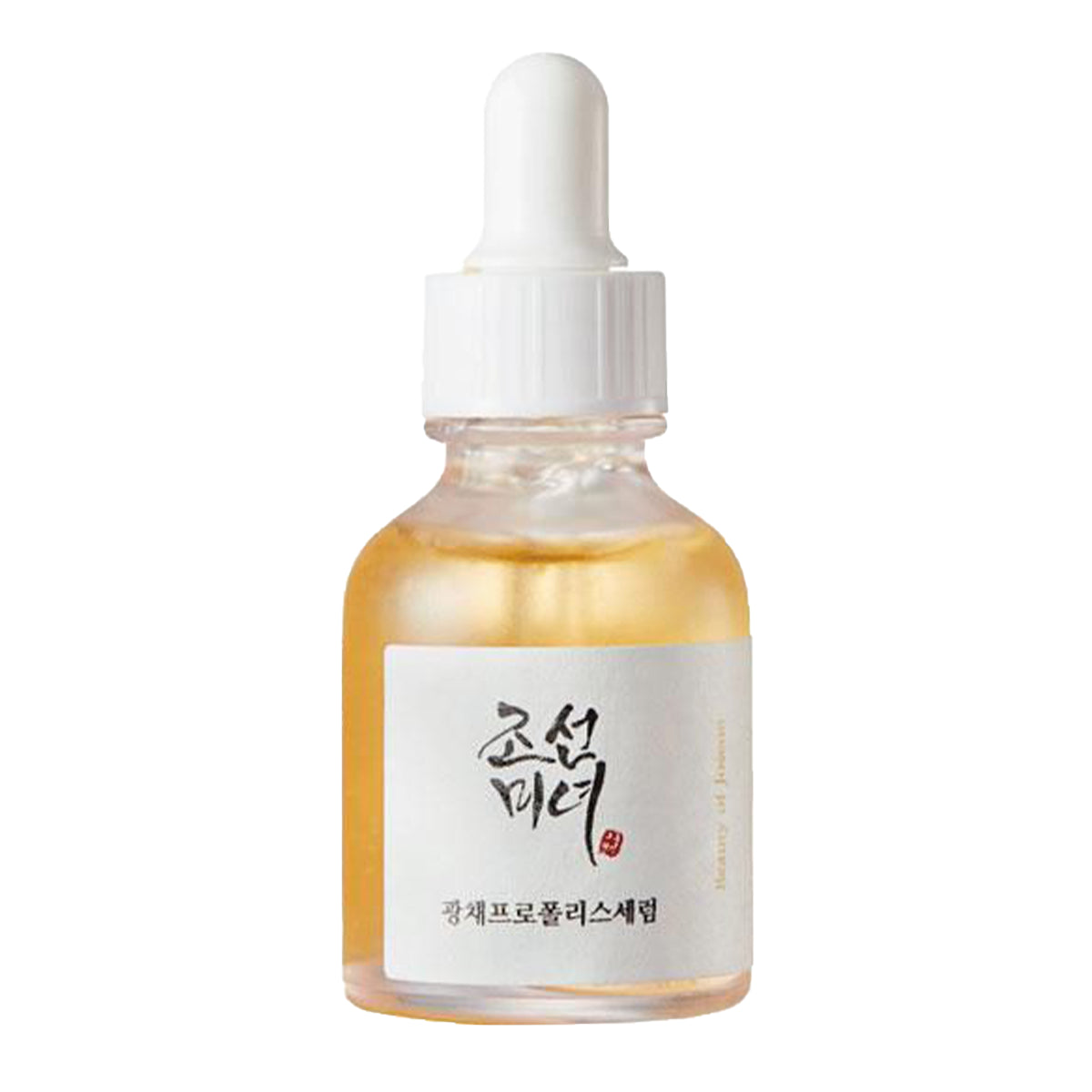
The Beauty of Joseon Glow Serum combines propolis extract with niacinamide. Niacinamide can support the skin barrier and help improve the appearance of uneven skin tone, while propolis may provide complementary soothing and antioxidant benefits.
Hyaluronic Acid, Ceramides and Centella
These ingredients can complement a propolis product by addressing different skincare needs. Hyaluronic acid helps attract water, ceramides support the skin barrier, and centella-containing formulas are commonly used to soothe the feeling of irritated skin.
Retinol and Exfoliating Acids
Propolis can be used alongside retinoids or exfoliating acids if your skin tolerates the complete routine. However, these active ingredients can cause dryness and irritation, especially when first introduced.
How to Choose a Propolis Product
The best propolis product is one that suits your skin's needs and has a well-formulated ingredient list.
-
For oily or combination skin: Consider a lightweight toner, essence or ampoule.
-
For most skin types: A serum can be a practical option if its formula is comfortable and non-irritating.
-
For dry skin: A richer cream or sleeping pack may offer a more moisturizing finish.
Do not choose a product based on its propolis percentage alone. Look at the full ingredient list, including moisturizers and other active ingredients. If you are reactive, pay attention to added fragrance, essential oils and potentially irritating ingredients.
Frequently Asked Questions
Is propolis good for your face?
It can be a useful skincare ingredient for hydration, a dewy appearance and potential soothing benefits. However, the results depend on the formulation, and some people develop allergic reactions. It is not a guaranteed treatment for acne, pigmentation or wrinkles.
Can you use propolis every day?
Many people can use a well-formulated propolis product daily if their skin tolerates it. Start gradually, follow the product directions and stop if you develop itching, redness or swelling.
Can you put pure propolis directly on your skin?
It is better to avoid applying raw propolis directly to your face. Its composition can vary, and it may irritate or sensitize the skin. Choose a formulated skincare product instead.
Is propolis vegan?
No. Propolis is collected by bees, so it is generally considered an animal-derived ingredient and is not vegan. Check the complete product formula and the brand's ingredient and sourcing policies if vegan skincare is important to you.